Collaborative jukebox: the playlist nobody controls
At every party, one person ends up hijacking the music. A collaborative jukebox flips the rule: everyone suggests, and chance decides.
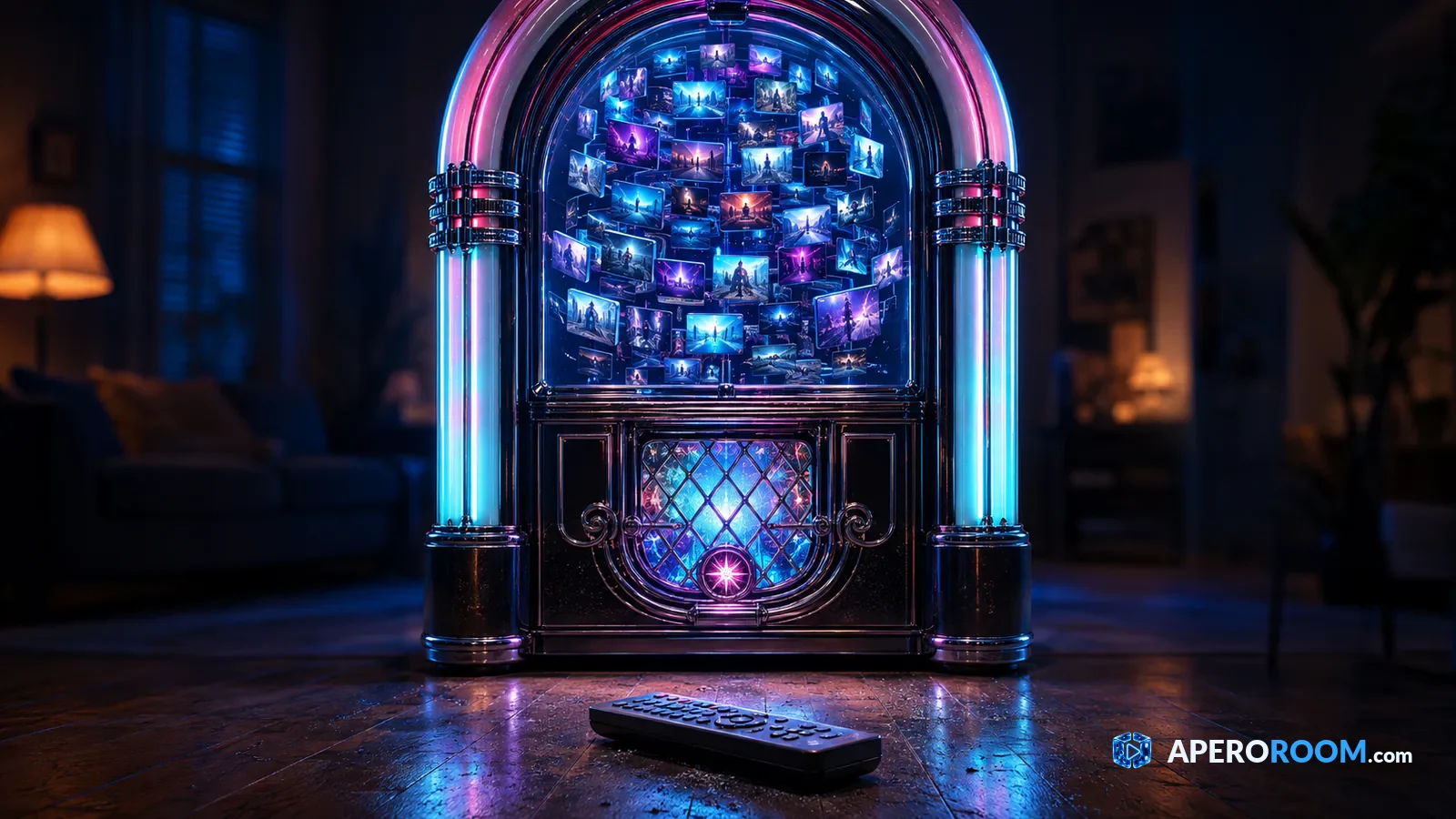
There's always someone holding the mouse. The one who knows "the track you absolutely have to hear", who cuts it after thirty seconds and moves on to another. Everyone else just takes it. That's the quiet drama of every party: one person decides what everybody listens to.
A collaborative jukebox flips that completely. Nobody holds the remote — because the remote is everyone's phone.
How a collaborative jukebox works
It comes down to one sentence: everyone suggests, only one plays, and no human picks it.
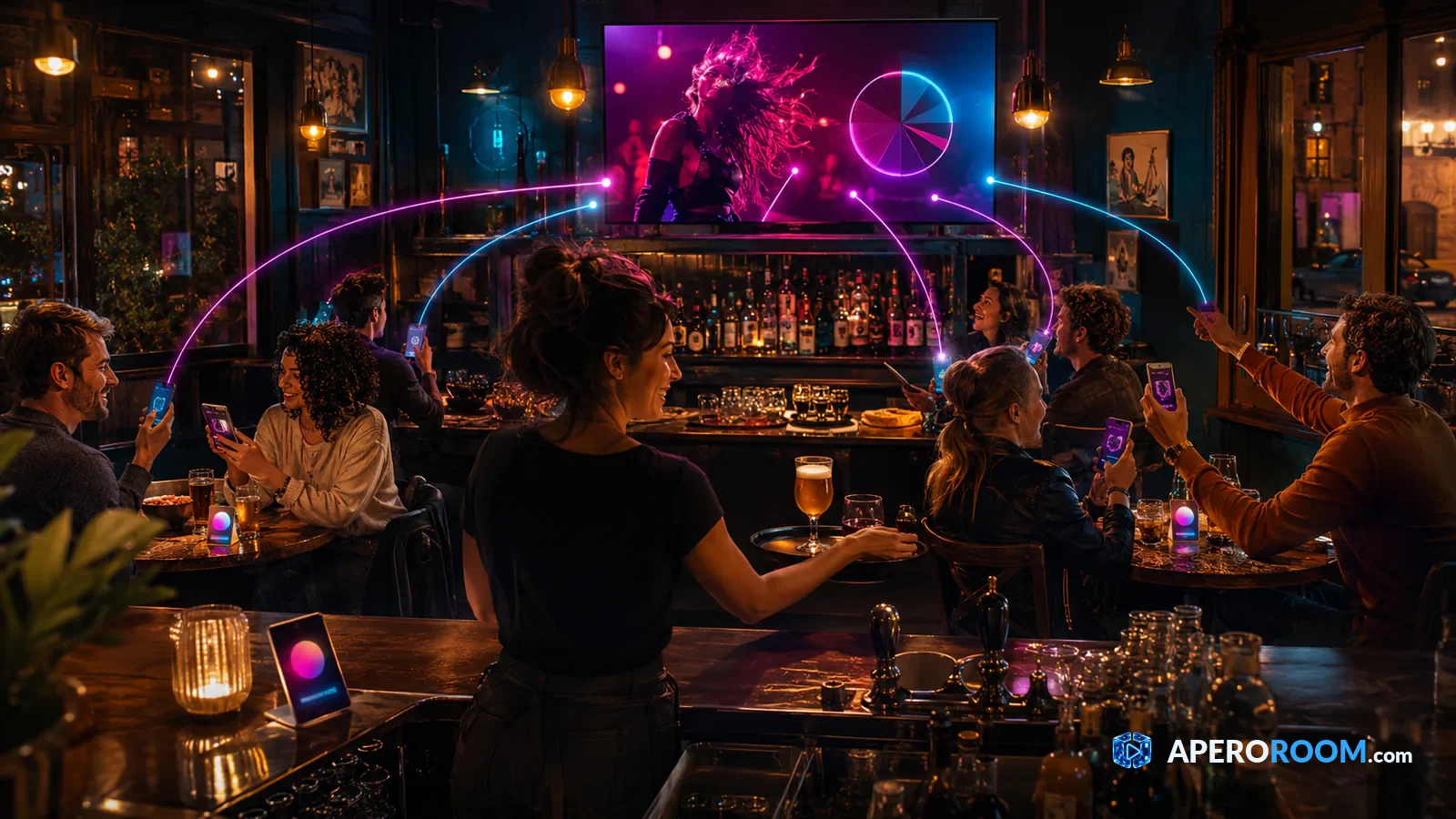
In practice, everybody has access to the same catalogue — YouTube videos, so pretty much everything in music, clips and famous scenes. Each person sends their suggestion from their phone. When the current video ends, a random draw picks the next one from all the suggestions. It starts on the shared screen and on every participant's device at exactly the same moment.
That detail is everything: without synchronisation you're not watching together, you're watching alone ten seconds apart. The laugh lands at the wrong time, the surprise is spoiled. With it, the reaction becomes collective.
Why a shared playlist always ends badly

The queue gets hijacked
A collaborative playlist lets everyone add a track… and one person reorder everything. Ten minutes in, the queue reflects a single person's taste. A random draw removes that power: your suggestion has exactly the same odds as anyone else's, whether you're the host or the last to arrive.
The gaps between tracks
The video ends, nobody reacts, someone reaches for their phone, the energy drops. A proper jukebox has no gaps: the next one is picked before the current one finishes.
The blame question
"Who put this on?" When chance decides, a bad surprise has no culprit — it has a winner. It's far funnier, and nobody feels judged on their taste. That's precisely what makes people brave enough to suggest the unlikely stuff.
How it plays out
1. Everyone suggests from their phone
You create a room, you share the link or display the QR code. Each person opens the page on their phone: it becomes their remote. They search for a video, they suggest it. Nothing to install, and no account needed to try.
2. Chance decides
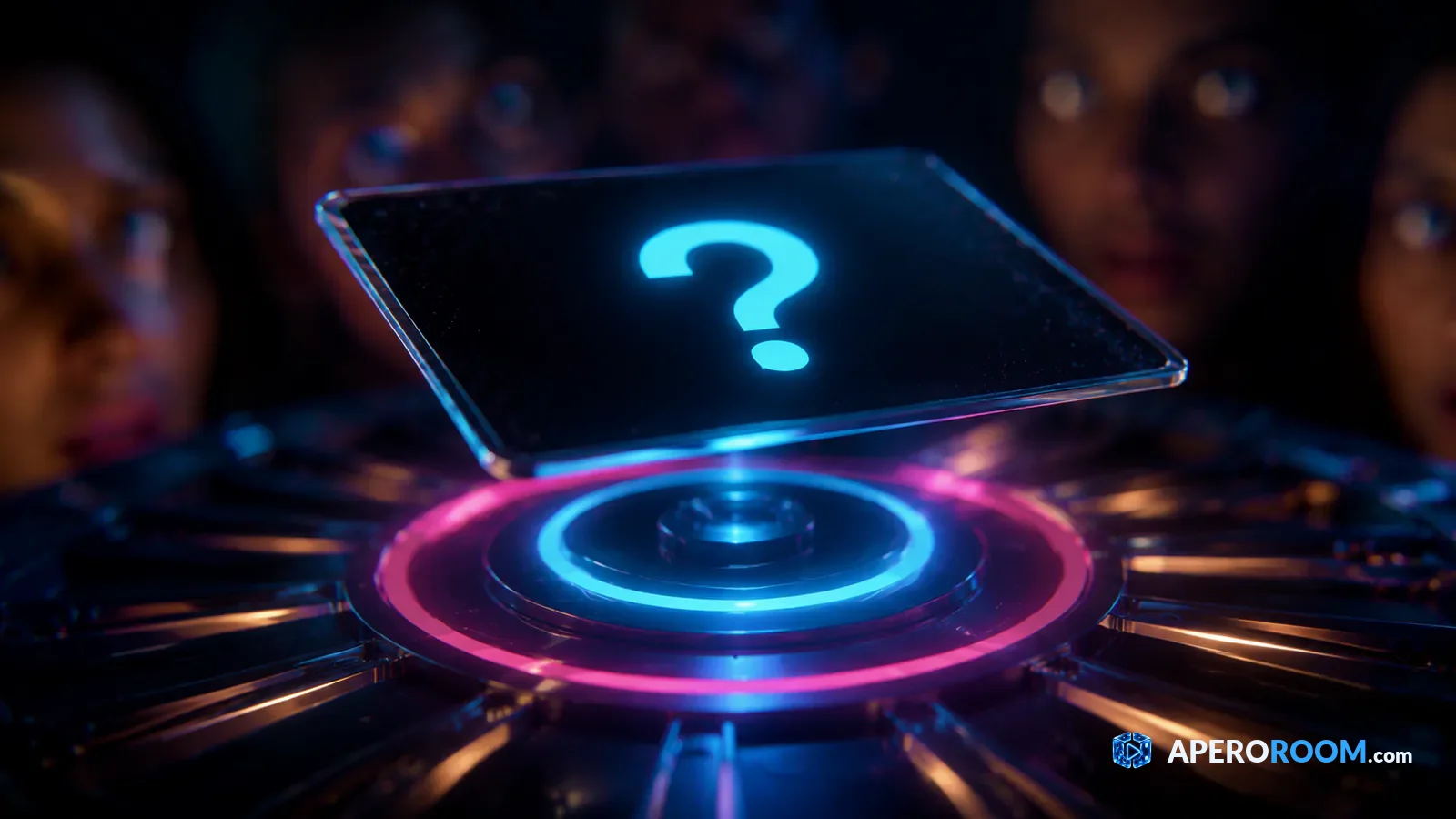
Twenty seconds before the current video ends, the draw takes place among all the suggestions. The winner appears on screen. It's the moment everybody watches — a little collective suspense every three minutes.
3. Everyone watches at the same time
The video starts at the same instant on the shared screen and on every connected phone. Anyone can react live. You can also keep your title hidden until it plays: that's surprise mode, and it's by far the most fun.
Which screen to use
A jukebox makes most sense on a big screen, with phones as remotes. Three setups work well:
- The living-room TV — the screen is cast via Chromecast, everyone keeps their phone in hand.
- A laptop on the table: plenty for six to eight people.
- A projector for big gatherings, indoors or out.
And if people aren't in the same room, it works exactly the same: everyone watches on their own screen, still in sync. The principle is covered in watching videos together remotely.
What kind of night suits it
Drinks with friends is the classic: it fills the silences, restarts conversations, and removes the "you're in charge of the music" chore. More formats in what to do with friends.
In a bar, the jukebox becomes entertainment: customers suggest from their table by scanning a QR code, with nothing to install and no staff involved.
At a themed party — birthday, wedding, New Year's — the random draw does an entertainer's job: it creates regular moments of surprise without anyone having to run them.
Frequently asked questions
Do I need a paid subscription?
No. Videos play through the standard player, under the same conditions as on the original site. No downloads, no workarounds.
How many people can take part?
From two to several dozen. Past fifteen suggestions per round, the draw is actually the only fair system: picking by hand guarantees someone's track never plays.
Does it work on phones only?
Yes. A phone can be both screen and remote, though it's far more enjoyable with a shared screen.
How is it different from a shared playlist?
A playlist is a queue: whoever gets there first sets the order. A collaborative jukebox is a game: you suggest, you wait for the draw, you find out together. It's the difference between a queue and a raffle.
Try it in a minute
The simplest test is to open a room and send the link to two or three people: within a minute everyone gets it. That's what we call participatory video — watching stops being passive and becomes a group game.
To go further, our round-up of online party games gives the rules that survive distance, and our comparison of the existing tools places each one by use case. Otherwise, start your apéro — it's still the quickest way.
Ready to watch together?
Open a room, share the link, and start the first video. Everyone suggests, chance decides, and you all watch at the same time. Free to get started.