Bar entertainment: the jukebox your customers programme
A bar that's packed on Friday can be painfully quiet on Tuesday. There's a lighter formula than a themed night: let the customers programme the screen.
A bar that's packed on Friday can be painfully quiet on Tuesday. The usual answer is a themed night: a quiz, a gig, a music round. It works, but it needs a host, equipment, and often a fee paid before you even know whether customers will show up.
There's a lighter formula: let the customers programme the screen themselves, from their table, with their own phone.
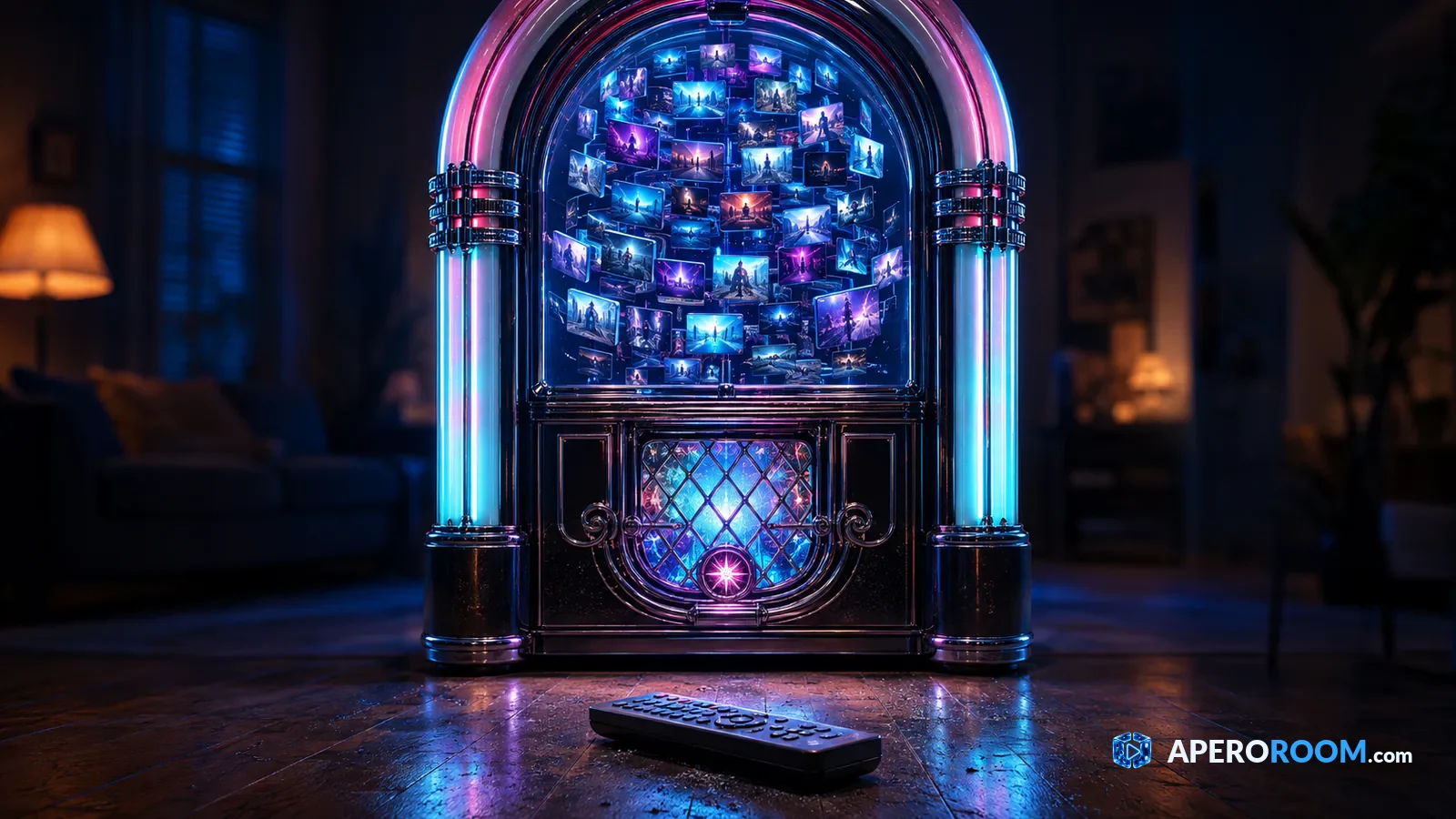
The idea: a participatory jukebox at the counter
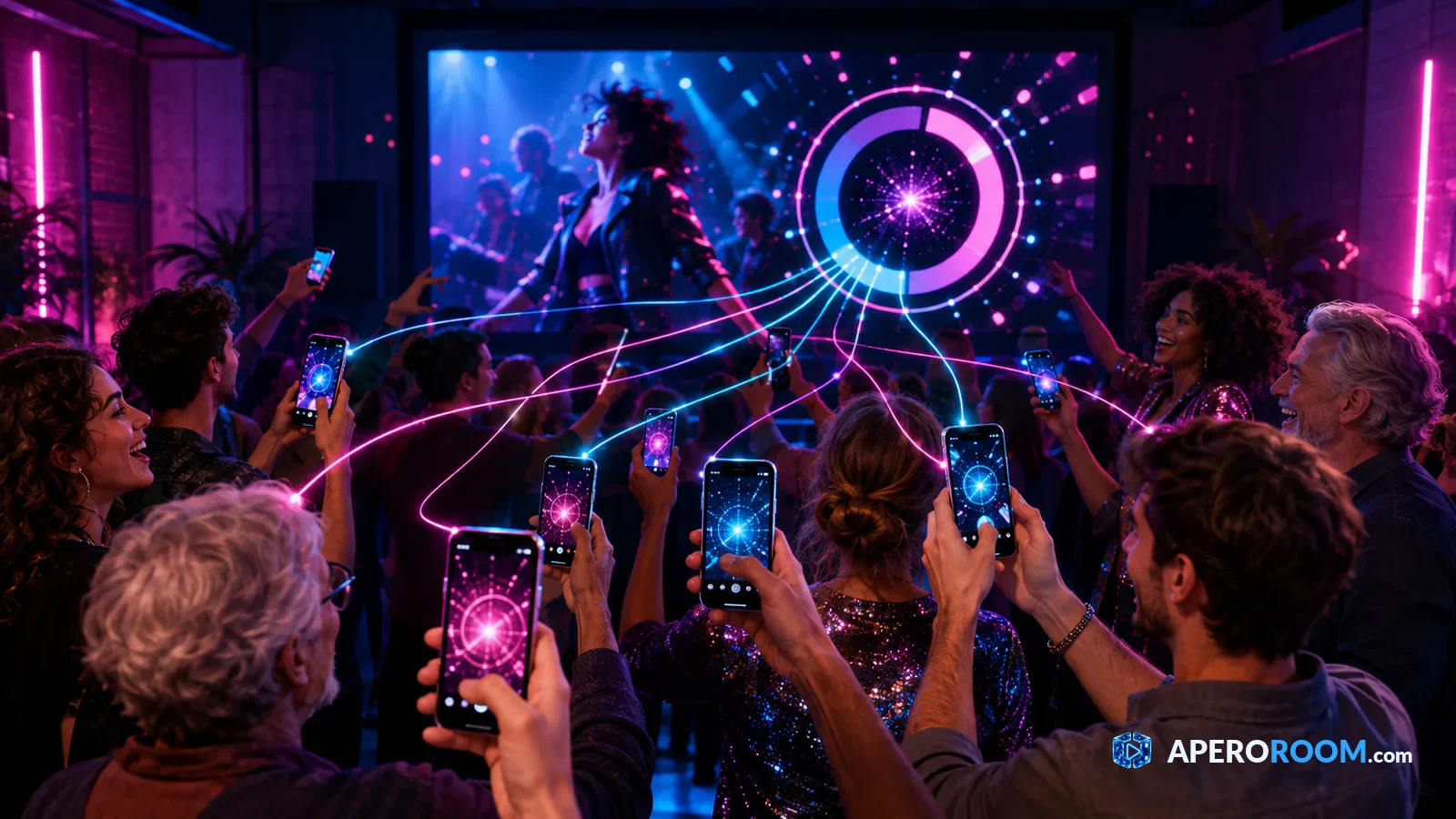
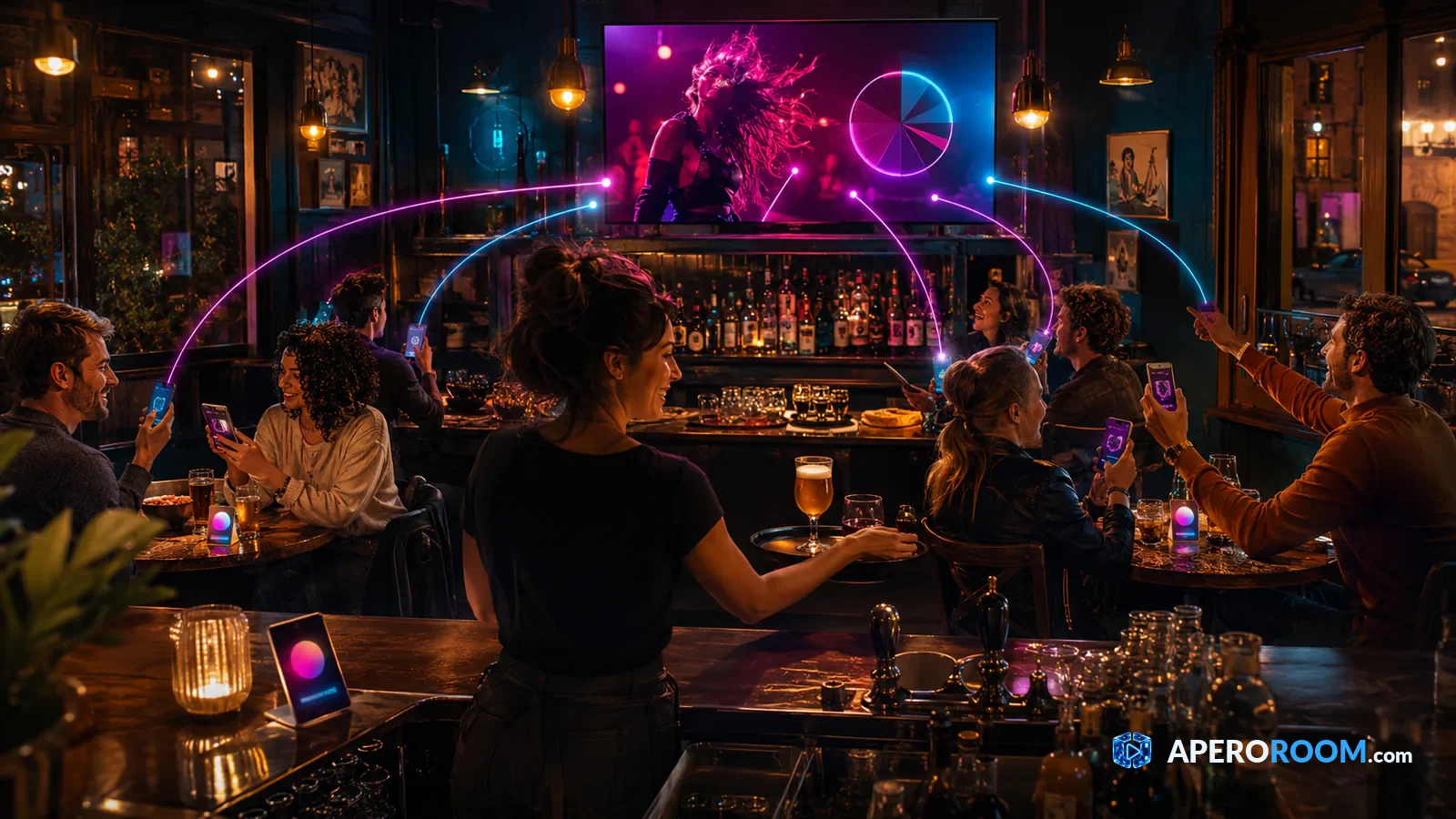
You put a QR code on the tables and at the bar. A customer scans it, suggests a video from their phone — a music clip, a hit, a famous scene — and a random draw decides which one plays next. It appears on the bar's screen, and everyone discovers it at the same time.
Nobody installs an app. Nobody asks the staff to plug in their phone. And crucially: your team has nothing to manage, which is the condition for it to survive a real service.
Why it changes how customers behave
They stay longer
Someone who has suggested a track waits to see whether it comes up in the draw. That single mechanism gives them a reason to order one more drink — not because you asked, but because they have something at stake.
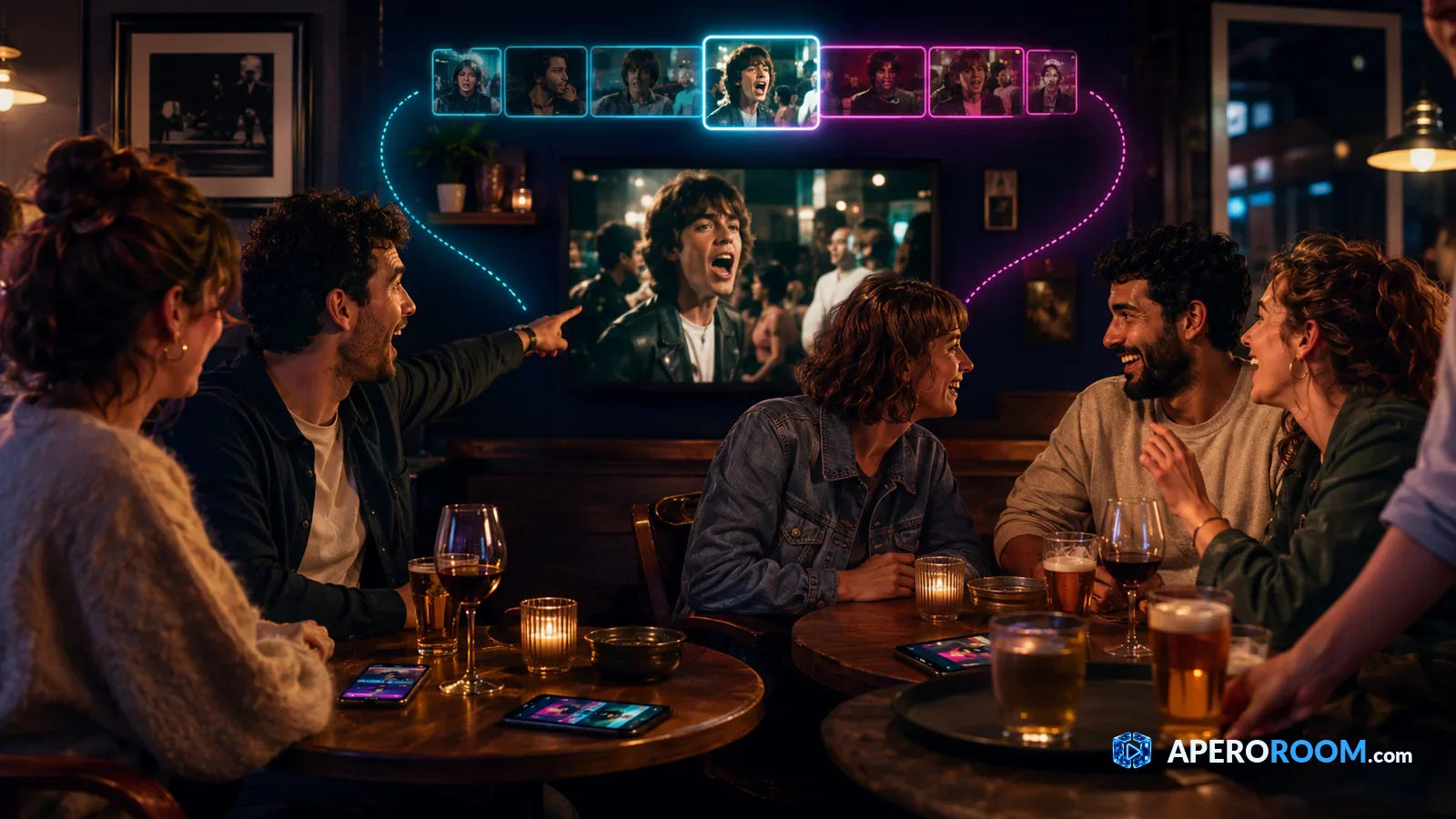
Tables start talking to each other
When a video plays, everyone looks at the same screen at the same moment. That's the starting point for conversations between tables that would otherwise never have happened. In a neighbourhood bar, that's exactly what you're after.
Nobody hogs the music
That's the classic jukebox risk: one table pays and imposes its taste all night. The random draw makes it structurally impossible — every suggestion has the same odds, whatever the table.
What you actually need
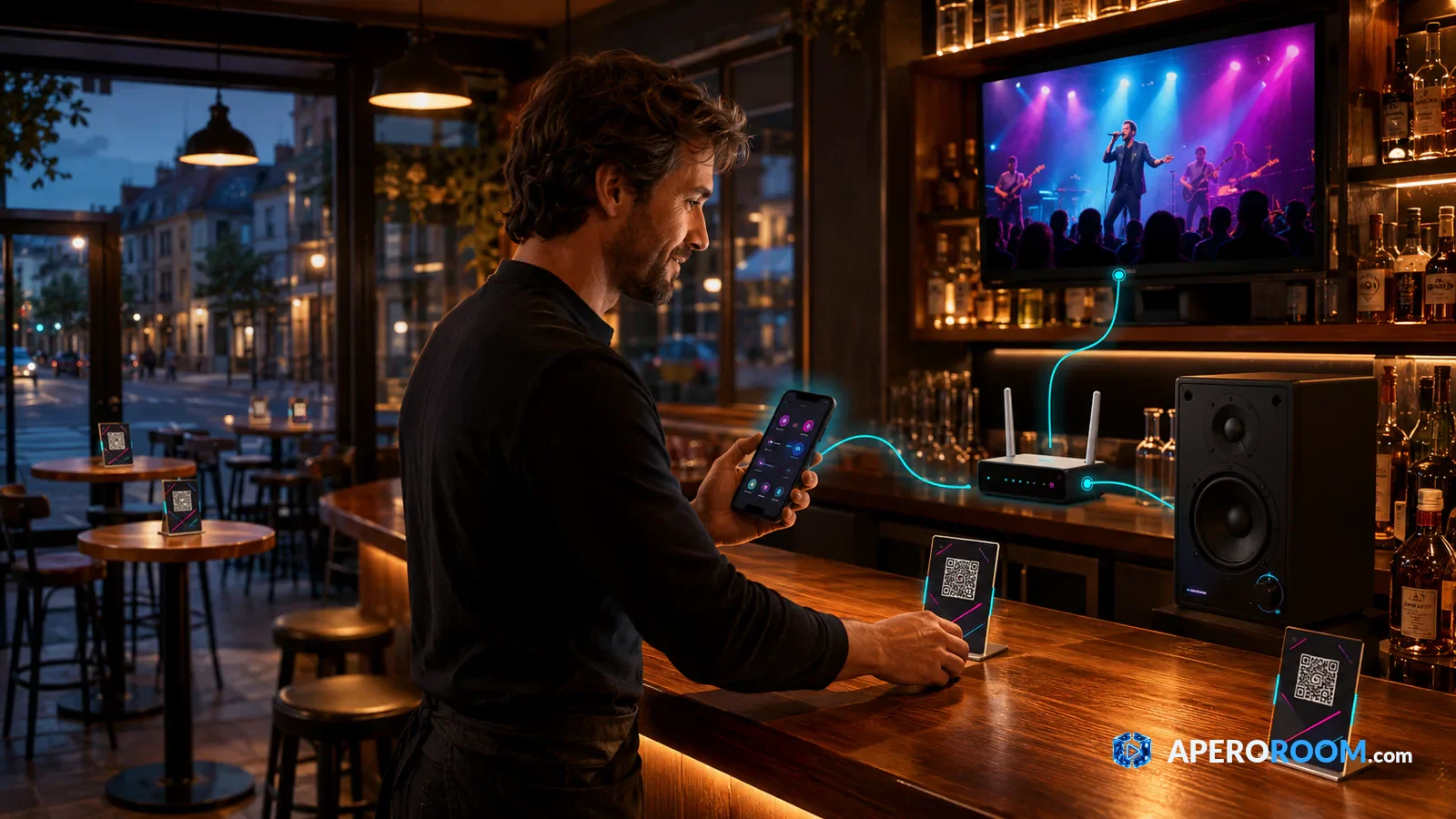
- A screen — a TV, a projector, or even the one you already use for sport.
- A decent internet connection; the bar's own is enough.
- A printed QR code — on tables, at the counter, on the chalkboard.
- Sound: that's the real subject. Make sure you can lower or cut it easily, especially during service.
No box, no hardware subscription, no technician.
The questions every owner asks
What if a customer puts on something inappropriate?
That's the first worry, and it's a fair one. Whoever opens the room keeps control: remove a suggestion, skip a video, mute someone or remove them. In practice moderation is rarely needed — the fact that everyone can see the screen is enough to keep people sensible.
Does it replace a DJ?
No, and that isn't the point. A DJ builds an arc across a night. A participatory jukebox fills the flat moments: early evening, afternoons, quiet weekdays — exactly where you wouldn't have paid for entertainment anyway.
Which night should I try first?
Your quietest night, not Saturday. You'll see the effect without disrupting a busy service, and the difference will be easier to read.
How a first night runs
Allow ten minutes of setup: open the room, display the QR, and play a first video so the screen isn't empty. The first customers who scan set the tone — which is why that opening video matters: pick something everyone can enjoy, not your personal taste.
The rest runs itself. The draw keeps things moving, and there's never a gap between videos.
Going further
How it works in detail is covered in collaborative jukebox: the playlist nobody controls. If you'd rather test the idea with friends before offering it to your customers, start an apéro — it's free and takes a minute.
Ready to watch together?
Open a room, share the link, and start the first video. Everyone suggests, chance decides, and you all watch at the same time. Free to get started.